
Climate Resiliency
Resiliency is a common word we often hear at times of struggle or distressing situations.
It refers to the ability to adapt positively to stressors while upholding well-being in the face of harsh conditions. It is the ability to “bounce back” from difficult experiences and being adaptable or flexible. At the same time, it is about knowing that we’ve got strengths that maybe we never knew we had, until we have to use them. We only learn more about it if we practice it more as well just like many other things in life, then the more resilient we become.

Sustainability Audit
Implementing sustainability audit initiatives in the Philippines can significantly enhance environmental governance and corporate responsibility, much like in Europe. Here are some possible implementations that could be adapted from European practices:
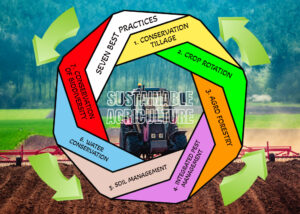
Sustainable Agriculture
Agriculture is the art and science of cultivating the soil, growing crops, and raising livestock. It includes the preparation of plant and animal products for people to use and their distribution to markets. Agriculture provides most of the world’s food and fabrics. When people began growing crops, they also continued to adapt animals and plants for human use.

Climate Change Mitigation and Adaptation
Climate change and its impact to our lives
Climate change is a reality affecting millions of people across the world. It is one of the most complex concerns we are facing today. It is a global problem felt on both local and international scale that has been around for years. The greenhouse gases such as carbon dioxide, methane, nitrous oxide, and fluorinated gases among other gases are the primary driver of global warming. These gases occur naturally, however, human activities led to increasing their concentrations in the atmosphere causing global warming. The amount of continuous emission and how exactly climate responds to those emissions determines the rate of climate change. These heat trapping gases linger in the atmosphere for thousands of years, but Earth took a while to respond to this. Therefore, even if we stopped emitting all greenhouse gases now, global warming and climate change will continue to impact our lives and our future generations. Because humanity has contributed greatly to the emissions of these greenhouse gases, we are also committed at some level to counter climate change through mitigation and adaptation.
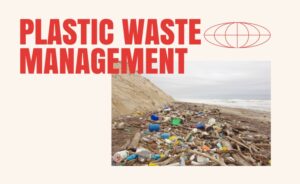
Plastic Waste Management
Plastic is universal; it is the backbone of globalization. They are essential in our modern age due to the growth of information technology and smart packaging systems. Plastic has many valuable uses. However, we have become addicted to single-use plastic products with severe environmental, social, economic and health consequences. Around the world, one million plastic bottles are purchased every minute, while up to five trillion plastic bags are used worldwide every year.
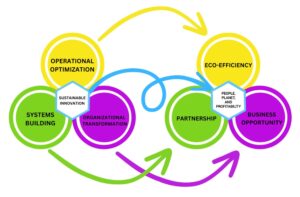
Sustainable Innovation
The evolution of technology and the demand for sustainable products and processes is becoming one of the main drivers of revenue growth and cost reduction across industries. Today’s sustainability leaders are four times more likely to be considered innovation leaders compared to those not focused on sustainability. Sustainable innovation finds ways to ensure resources. They aren’t used faster than they are replenished and limit the negative impact of business activity on society and the planet. This belief is driving innovations in all areas of business
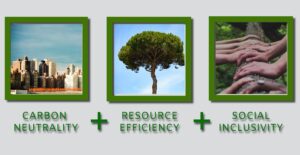
Green Economy
The rapid consumption of the Earth’s natural resources, driven by the needs of a growing population (such as food, clothing, housing) as well as the needs to supply the raw materials of modern industry (gas, oil, minerals) has caused concern among scientists and environmentalists alike. According to the Food and Agriculture Organization of the United Nations (FAOUN) in 2020 3 billion people could not afford the cheapest healthy diet, and 13% of the world population is obese2.
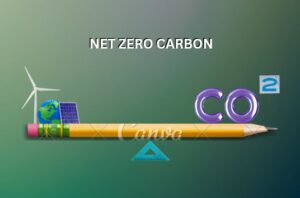
NET ZERO CARBON EMISSION
The World Meteorological Organization has recorded the warmest 20 years in the last 22 years. According to the record the warmest four years were 2015 to 2018. This means that global average temperature now is 1.2C (2.16F) higher than in the pre-industrial era. This incremental warming appears to be having negative impact in all parts of the Earth. Many people think that climate change mainly means warmer temperature but it is only the beginning. If the recent trend continues by 2100 as the global warming intensifies, the consequences of climate change such as erratic weather patterns, intense droughts, water scarcity, severe fires, rising sea levels, flooding, and melting polar ice, catastrophic storms and declining biodiversity will worsen.
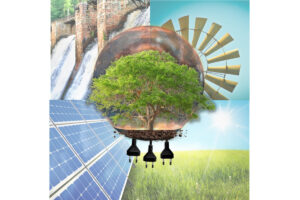
Renewable Energy
Around 80 percent world energy consumption is from fossil fuels, while only 10 percent is from renewable energy. We can define RE as energy generated from sources that naturally replenish themselves and never run out. The six best known/popular RE sources are:

Understanding Biodiversity
Biological diversity (biodiversity), essentially defined as the existence of millions of species in various ecosystems and the interrelationship among these ecosystems, has, since industrialization took hold of planet earth, witnessed changes in landscape, seascape and the skies. These were brought about by various forms of disturbances, one being natural in nature (biological), essentially the major type of disturbance prior to global industrialization and then subsequently becoming more a result of human action (non-biological) in the 19th, 20th and 21st centuries. Surprisingly what took millions of years for earth to nurture the richness in biodiversity, which man’s forefathers had the luxury to enjoy, took man only 300 or so years to exploit nearly to the point of extinction. Based on a thorough analysis of relevant evidences, the five direct drivers of change in nature, with the largest relative impact are, in descending order, (1) changes in land and sea use, (2) direct exploitation of organisms, (3) climate change, (4) pollution and (5) invasive alien species.[1]